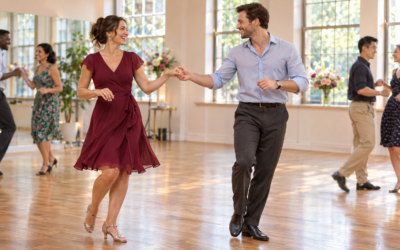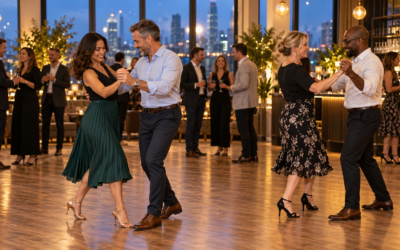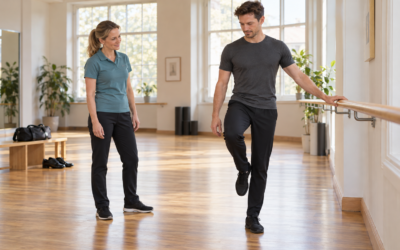
You have been working on your Ballroom frame, practising a new Latin routine or rehearsing your first wedding dance. The steps are becoming more familiar, but you are also starting to notice how much dancing asks of your body.
Perhaps your shoulders feel tense after a busy working day. Perhaps your legs feel tired after a longer practice session. Or perhaps a particular movement feels restricted, even though you understand what you are trying to do.
Alongside good teaching and sensible practice, some dancers choose services such as deep tissue massage, sports massage and assisted stretching. These can have a place in a balanced routine, provided you understand what they can realistically offer.
At Step By Me Dance Studios in Westminster, our focus is helping you learn and enjoy Ballroom and Latin dancing. This guide explores complementary services you may wish to discuss with an appropriately qualified provider alongside your lessons.
What does “complementary” mean for dance lessons?
Complementary services are activities or treatments that support your wider dance routine. They sit alongside technique work, practice, rest and general conditioning.
For example, a massage might help you feel more relaxed, while a stretching programme may help you work on a specific flexibility goal. Neither teaches you how to coordinate a turn, respond to a partner or interpret a piece of music.
It helps to start with a clear question: what would I like support with?
Feeling tense after work, wanting more comfortable movement and experiencing recurring pain are different situations. They do not necessarily call for the same service.
You also do not need to book additional treatments simply because you have started dancing. Many people enjoy regular lessons with a straightforward routine of gradual practice, appropriate preparation and adequate recovery.
Deep tissue massage for dancers
Deep tissue massage generally uses slower, more focused pressure to work on muscles and other soft tissues. People often seek it for areas that feel persistently tense, such as the shoulders, back or legs.
For a dancer, the appeal may be time to unwind and address a feeling of muscular tightness. If you arrive at your evening lesson after hours at a desk, that tension may reflect your whole day rather than dancing alone.
Massage can offer short-term relief for some types of discomfort, although research quality and results vary. It is best approached as an option for comfort rather than a way to permanently correct posture or solve every movement restriction.
Does deep tissue massage need to hurt?
No. Pressure should be adjusted to your comfort and circumstances. Sharp pain, breath-holding or feeling that you must endure the session are reasons to speak up.
Tell the therapist where you feel tension, what your dance routine involves and whether you have any injuries or medical conditions. More pressure is not automatically more effective.
Some people feel tender after firm massage. If you are considering it for the first time, avoid trying an unfamiliar intensive session immediately before an important performance or wedding dance.
Sports massage for dance recovery
Sports massage is usually organised around physical activity and the demands it places on your body. You do not need to compete or train professionally to consider it.
A therapist might ask about how often you dance, recent changes in your activity, other exercise and the areas that feel uncomfortable. The session should reflect that information rather than apply the same treatment to everyone.
Deep tissue and sports massage can overlap. “Deep tissue” describes an approach to pressure and soft-tissue work, while “sports massage” describes a focus on activity-related needs. A sports massage does not have to be particularly forceful.
Click here for a local Sports Massage provider close to Step By Me Dance Studio.
What does the evidence suggest?
A systematic review published in BMJ Open Sport & Exercise Medicine found that sports massage did not directly improve measured sporting performance. It did find small benefits for flexibility and delayed-onset muscle soreness, often called DOMS.
That distinction matters. Massage may help some people feel less sore after activity, but it should not be sold as a shortcut to stronger legs, better stamina or more accurate footwork. The findings also come from sports research, rather than establishing a guaranteed result for Ballroom or Latin dancers.
For a social dancer, a reasonable goal might be feeling more comfortable between sessions. Whether massage is worth continuing depends on your response, preferences and budget.
Assisted stretching for dancers
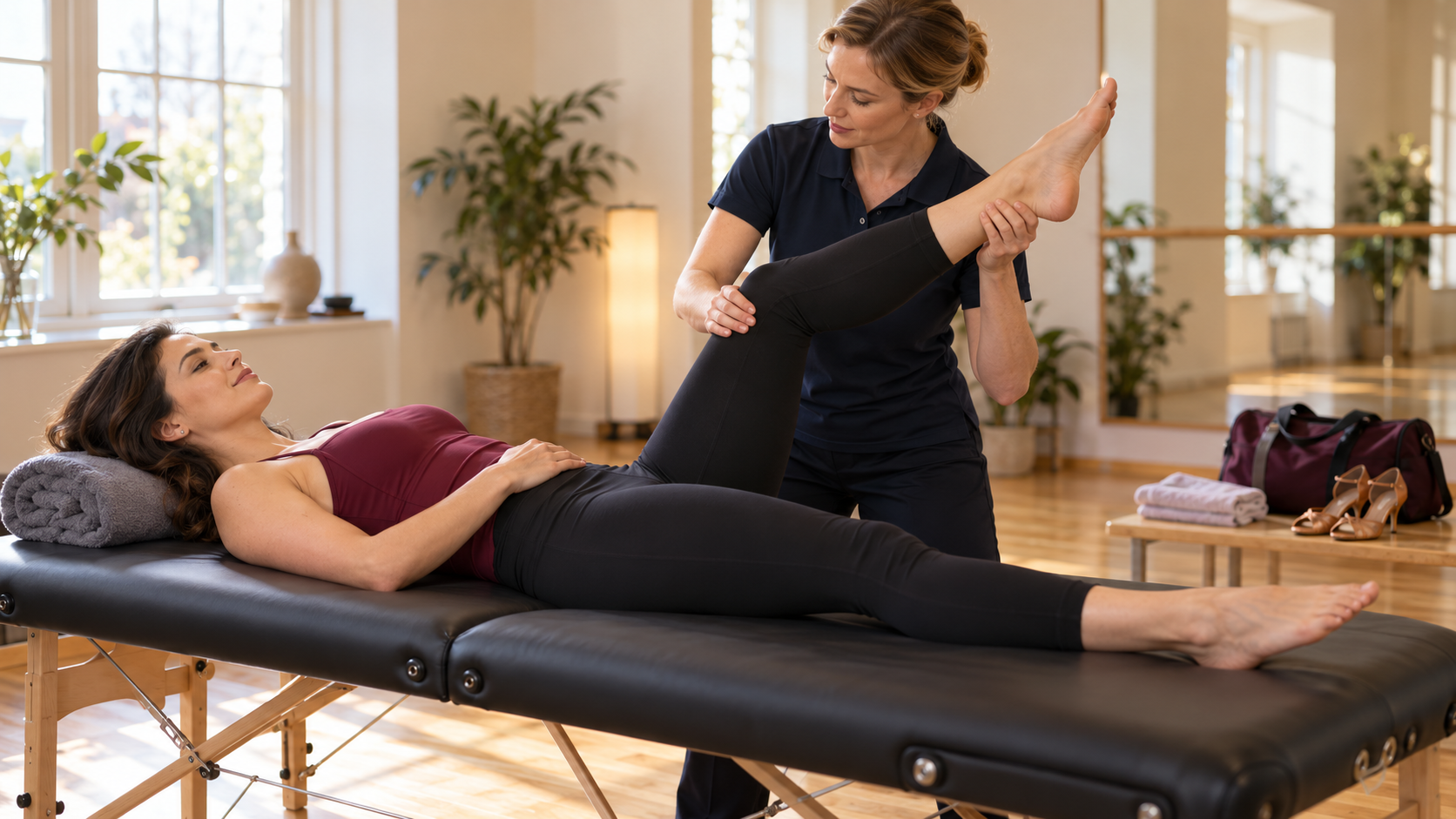
Assisted stretching involves a practitioner helping you move into and maintain a stretch. Depending on the approach, you may remain relatively relaxed or actively participate in parts of the movement.
Its practical appeal is guidance. Someone can help you understand positioning, monitor your response and keep the session focused on an agreed goal.
For dancers, useful goals might include more comfortable shoulder movement or working on a particular restriction identified during a suitable assessment. Regular stretching can improve range of motion, but there is no need to assume that assisted stretching is better than a well-designed programme you can perform independently.
Click here for a local Assisted Stretching provider close to Step By Me Dance Studio.
Flexibility needs control
Being able to reach a position with assistance is different from controlling that position while dancing.
A larger range of motion is only useful when it suits the movement and you can manage it comfortably. This is why flexibility work should be considered alongside strength, balance and technique.
If you are already very flexible or have hypermobile joints, seeking a deeper stretch may be unhelpful. Ask an appropriately qualified professional whether control and strength would be a more useful priority.
Assistance should never become force. Tell the practitioner immediately if you feel pain, tingling or an uncomfortable pressure in a joint.
Stretching is not the same as warming up
It is tempting to think that a long stretch before class prepares you for everything that follows. Dance medicine guidance makes a clear distinction between a warm-up and flexibility training.
A warm-up gradually prepares you for the movement you are about to do. This can include gentle activity to raise your temperature, joint movements and progressively more dance-specific actions.
Long, sustained stretching sessions have a different purpose. They are not a replacement for warming up, particularly before faster or more demanding dancing.
Ask your instructor about suitable preparation for your lesson. If you also attend assisted stretching sessions, discuss how to fit them around your dance activity rather than treating them as your pre-class warm-up.
Strength and conditioning can complement dance lessons too
Massage and stretching are only two parts of a much broader picture. Depending on your needs, supervised strength and conditioning may be another useful addition.
A programme can focus on the physical demands you want to manage better, such as balance, controlled changes of direction or maintaining comfortable posture as you tire.
Pilates is one option some dancers enjoy for movement awareness and controlled exercise. Others prefer a straightforward strength programme. The useful question is whether the activity supports your needs and fits your week, rather than whether it has a particular label.
Discuss any existing symptoms or injuries before starting. If a movement repeatedly causes pain, seek assessment rather than adding more exercise in the hope of working through it.
When physiotherapy is more appropriate
Recurring pain deserves more attention than a routine recovery appointment.
If a knee hurts whenever you turn, an ankle repeatedly gives way or discomfort keeps returning after temporary relief, a physiotherapist can assess the problem and advise on rehabilitation and activity modification.
Massage or stretching may sometimes form part of a wider plan, but neither replaces understanding what is causing the difficulty.
For a new sprain or strain, NHS guidance advises avoiding massage during the first couple of days because it may increase swelling. Seek prompt advice for severe or worsening pain, substantial swelling, numbness or difficulty putting weight on an injured limb.
Let your dance instructor know about relevant symptoms and any advice you have been given. That helps you discuss appropriate changes to your lessons.
Choosing a massage or stretching provider in London
A good starting point is someone who asks questions before beginning treatment.
Explain the dance styles you practise, how frequently you attend lessons and what you would like help with. Mention other exercise, relevant medical conditions, medication and any recent injury.
Useful questions include:
- What relevant qualifications and insurance do you hold?
- Have you worked with dancers or people doing similar activities?
- How will you decide whether this service is suitable for me?
- What benefits are realistic, and how will we review progress?
- Can the pressure or stretch intensity be adjusted throughout?
- When would you recommend assessment by another professional?
If you take blood-thinning medication, have a clotting history, osteoporosis, a recent operation or another significant health condition, check suitability with your healthcare professional before booking massage. Tell the practitioner if you are pregnant so they can assess their training and the adjustments required.
A responsible provider should be comfortable explaining the limits of their service.
Build support around your actual dance routine
The most useful routine is one you can maintain without turning a hobby into a crowded timetable of appointments.
For someone attending a weekly private dance lesson, short periods of manageable practice and good preparation may be enough. Someone increasing their rehearsal time may need to pay closer attention to fatigue and recovery.
Start with the basics:
- Build practice time gradually.
- Allow time for sleep, meals, hydration and recovery.
- Prepare for the movements you will be practising.
- Tell your instructor when a movement feels uncomfortable.
- Review extra services according to whether they make a worthwhile difference.
If you choose massage or assisted stretching, try one change at a time. Notice how you feel afterwards and during your next lesson. There is no universal treatment frequency that every dancer needs to follow.
Preparing for your wedding dance
Learning a first dance can involve unfamiliar movements at an already busy time. Keep the preparation manageable, particularly as the wedding approaches.
Short, focused rehearsals can be easier to fit around other commitments than occasional exhausting sessions. Comfortable practice footwear and choreography suited to your abilities also matter.
If you enjoy massage, plan it around your existing response to treatment. The days immediately before the wedding are not an ideal time to experiment with a much firmer massage or an intensive stretching session.
The goal is to arrive feeling comfortable and familiar with your dance, without adding unnecessary pressure to achieve a dramatic new range of movement.
Frequently asked questions
Is sports massage better than deep tissue massage for dancers?
Neither is automatically better. The techniques can overlap, and the right choice depends on your aims, health and preferences. Ask how the therapist would adapt the session to your needs rather than choosing solely by the treatment name.
Can massage prevent dance injuries?
Massage should not be relied upon to prevent injury. It may help with comfort or soreness, but it does not replace appropriate training, recovery, technique or assessment of symptoms.
Will assisted stretching make me a better dancer?
It may support a suitable flexibility goal, but dancing also depends on strength, coordination, musicality and partner skills. More flexibility alone does not guarantee better dancing.
How often should dancers book massage?
There is no fixed schedule for everyone. Consider your activity, response to treatment and budget. If you need frequent treatment to manage recurring pain, seek an assessment rather than assuming repeated massage is the answer.
Are these services available at Step By Me Dance Studios?
This article discusses services that can complement dance lessons with suitably qualified providers. It does not describe an onsite massage or assisted stretching service at Step By Me. Contact the studio for information about its dance lessons.
Enjoy learning to dance at Step By Me
Looking after yourself between lessons can help you make space for what you enjoy about dancing: the music, the partnership and the satisfaction of learning something new.
Whether you choose occasional massage, guided flexibility work or a simple routine of practice and recovery, keep your goals realistic and your dance experience at the centre.
At Step By Me Dance Studios, you can explore Ballroom and Latin dance styles at our Westminster studio, including lessons for individuals and couples.
Contact Step By Me Dance Studios to discuss your experience and arrange suitable lessons.
Find us at 3 Ashley House, Unit 2 Monck Street, Westminster, London, SW1P 2FA, or call 020 3802 7326.
Sources and further reading
- NCCIH: Massage Therapy, What You Need To Know
- Davis and colleagues: Effect of sports massage on performance and recovery, systematic review and meta-analysis
- IADMS: The Importance of a Good Warm-Up
- Mayo Clinic: Stretching and flexibility
- Mayo Clinic: Massage therapy and precautions
- NHS: Sprains and strains